The First St. Charles Hotel — circa 1837
The first St. Charles opened about 1837 and quickly became known as one of the premier hotels in the United States, noted for its architectural beauty and excellent accommodations.
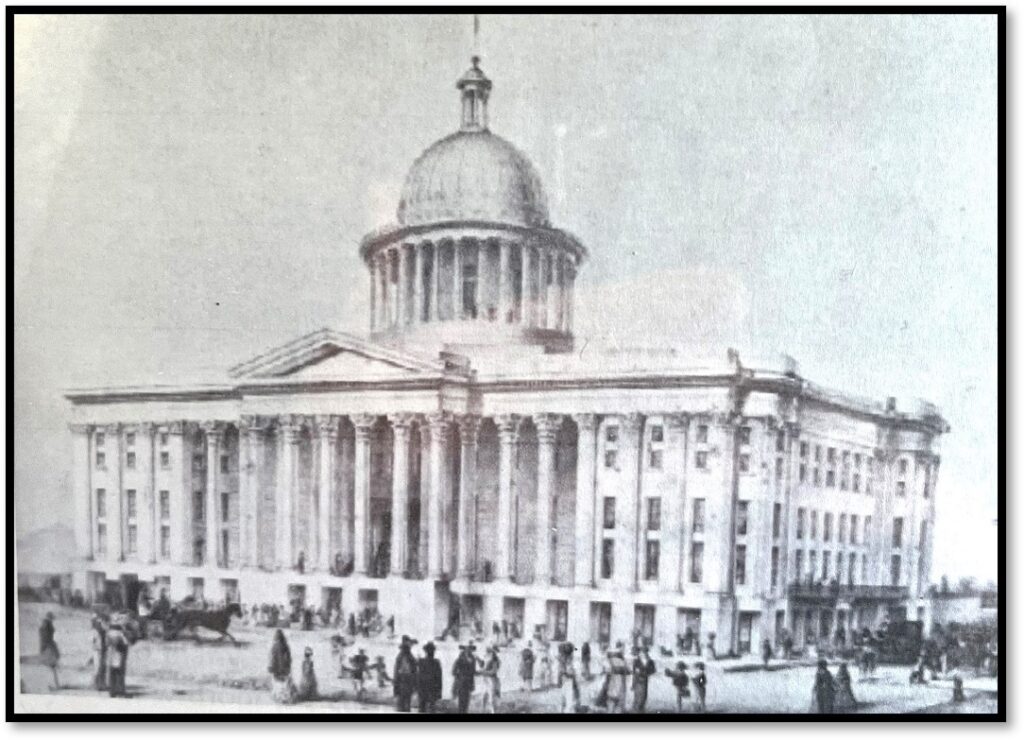
The Second St. Charles Hotel – 1851-1894
The hotel was heavily damaged by fire in 1851 and reconstructed, but the magnificent cupola of the original building was not replaced.
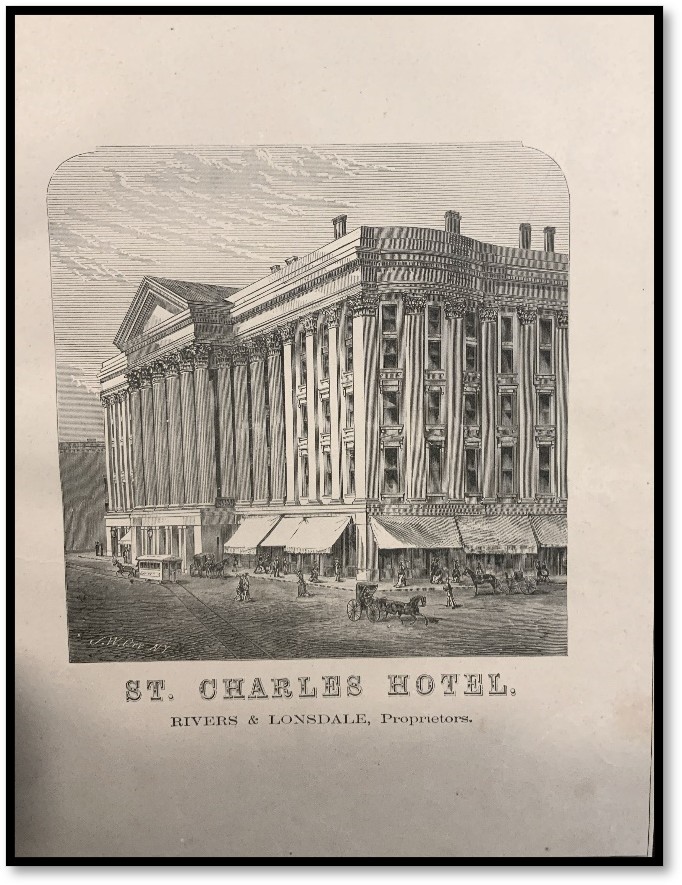
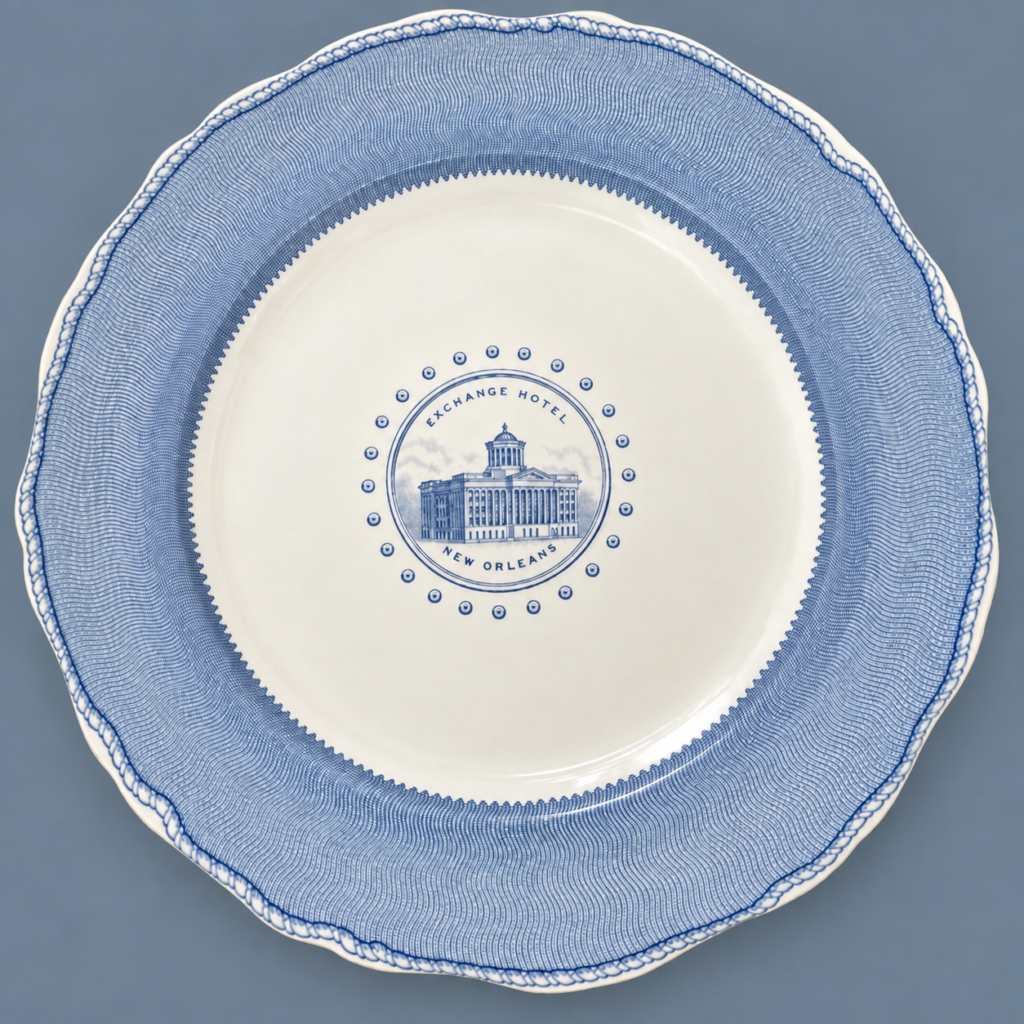
The Third St. Charles Hotel – 1894-1974
In 1894, another devastating fire destroyed much of the hotel, and the remains were demolished. A third and final St. Charles was then constructed on the same site. It closed its doors in 1974 and was demolished shortly afterward.
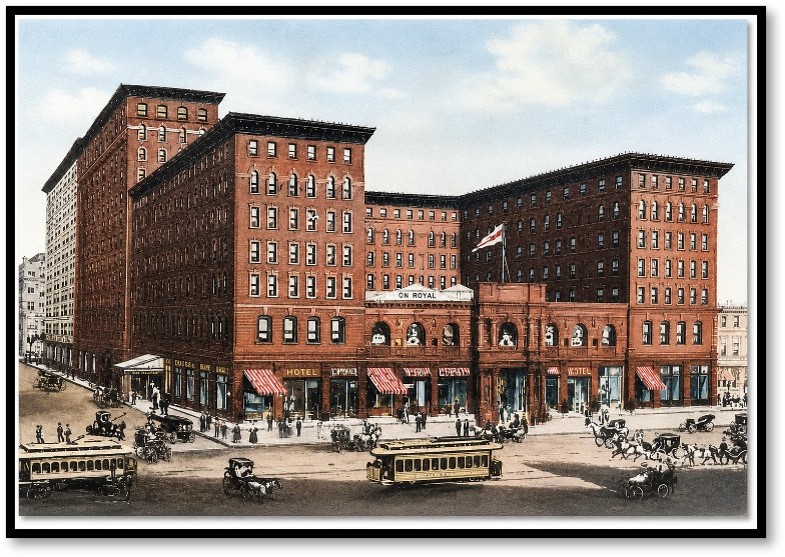
The Exchange Hotel Plate
This is a particularly special piece in our collection. When the first St. Charles Hotel opened around 1837, it was known as the Exchange Hotel. This plate depicts the magnificent building and bears the name “Exchange Hotel,” providing a remarkable connection to the earliest days of the hotel.
The plate is especially interesting because it has survived for more than 180 years. It was made by Davenport, a well-known British manufacturer, and the New Orleans importers, Henderson & Gaines, were in business here during the 1830s. The plate is approximately 9½ inches in diameter.
The Exchange Hotel name appears to have been used only briefly before the hotel became known as the St. Charles Hotel, making this an especially interesting piece of early New Orleans history.
Early St. Charles China
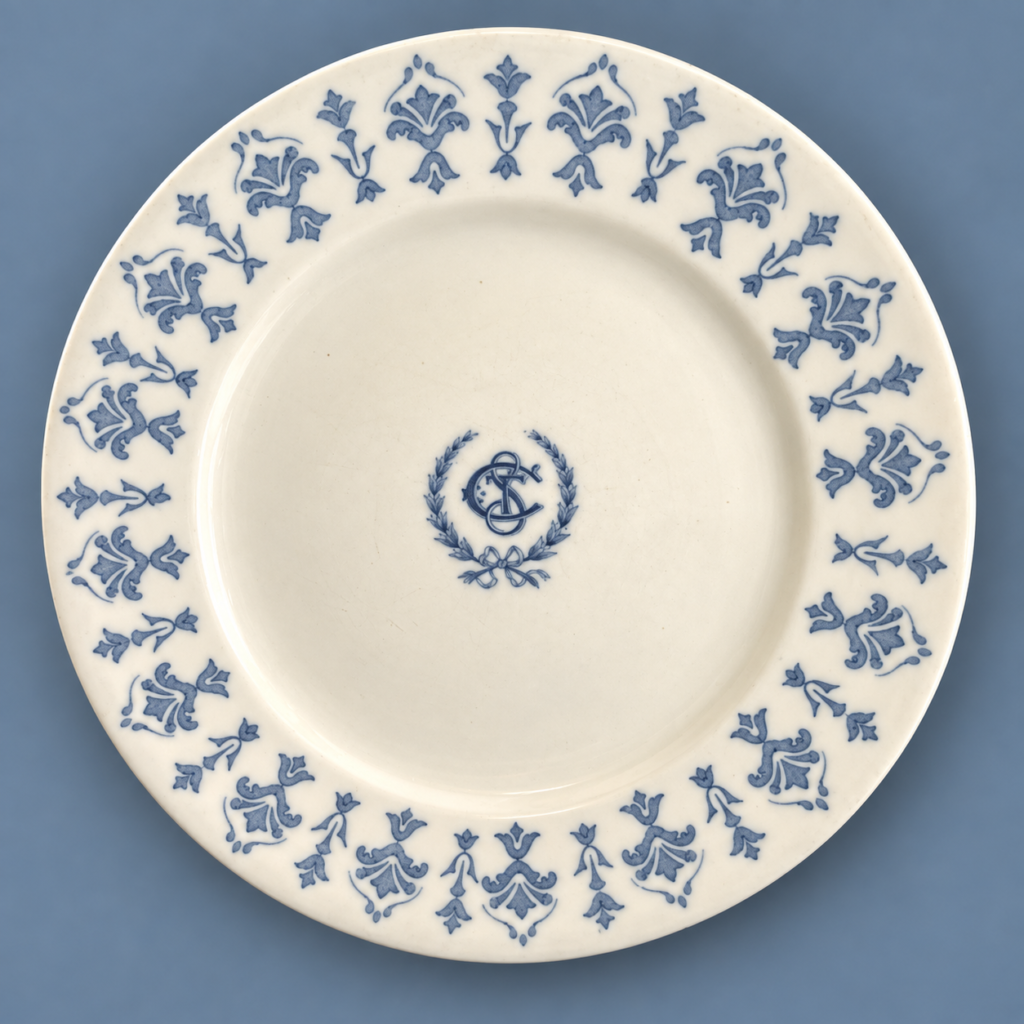
This relatively early piece of dining china dates from 1899 and is most likely from the St. Charles Hotel, although there is some uncertainty. It bears the initials “StC,” and the rim design resembles a stylized fleur-de-lis, but there is no positive identification connecting it to the hotel.
The plate was made by Syracuse China and is approximately 8 inches in diameter.
Two Versions of a St. Charles Pattern
These two pieces feature the long-lived logo of the St. Charles Hotel, making their connection to the hotel much more certain.
The earlier version is marked M. L. China (Maddock Lamberton), a mark believed to have been used from the 1890s until about 1910. Because the second St. Charles Hotel burned in 1894, this pattern may have been used there, although it is more likely that it was used in the third and final St. Charles Hotel.
The second piece is a nearly identical updated version made by Bauscher China in 1924.
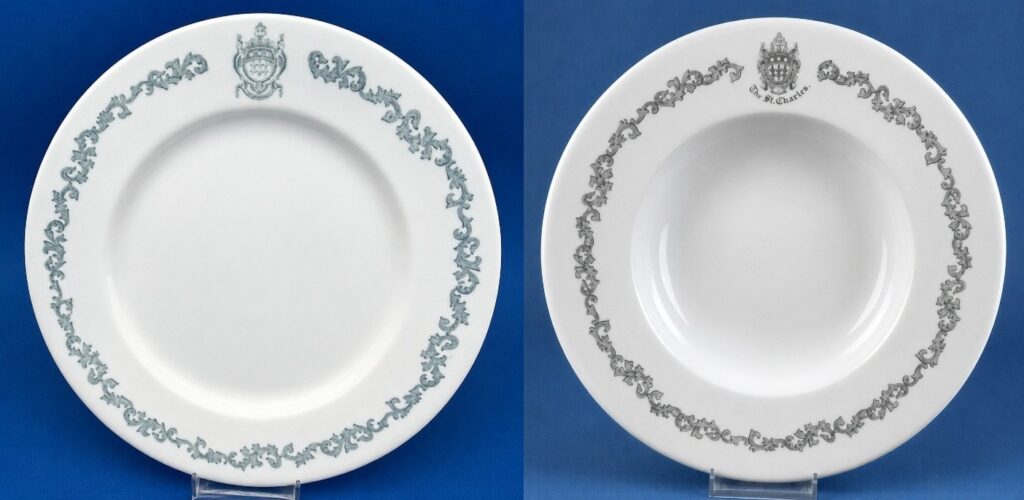
Earlier version (left) – M. L. China, circa 1890s-1910
Updated version (right) – Bauscher China, 1924
The Italian Garden
Next, we come to a beautiful pattern that is not only definitely from the St. Charles but is identified as having been used in a specific and famous restaurant within the hotel. The pattern is from the Italian Garden and is marked as such on the reverse of the plate. The maker is Lamberton China, and the plate is 10 inches in diameter.
The Italian Garden is said to have opened around 1910. Below is a postcard showing the Italian Garden at about that time.
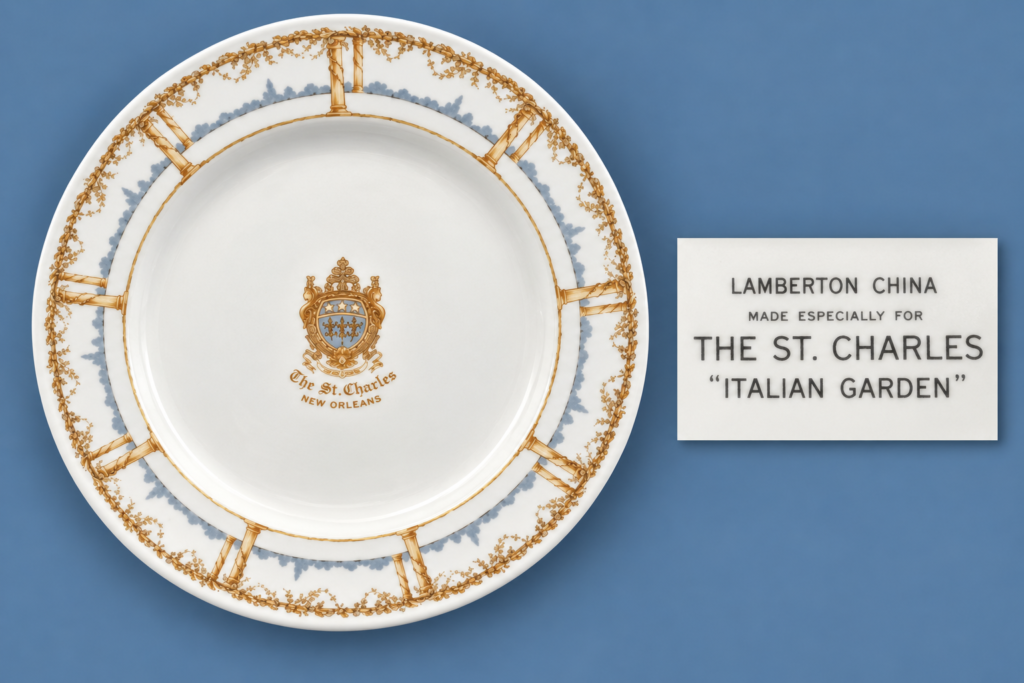
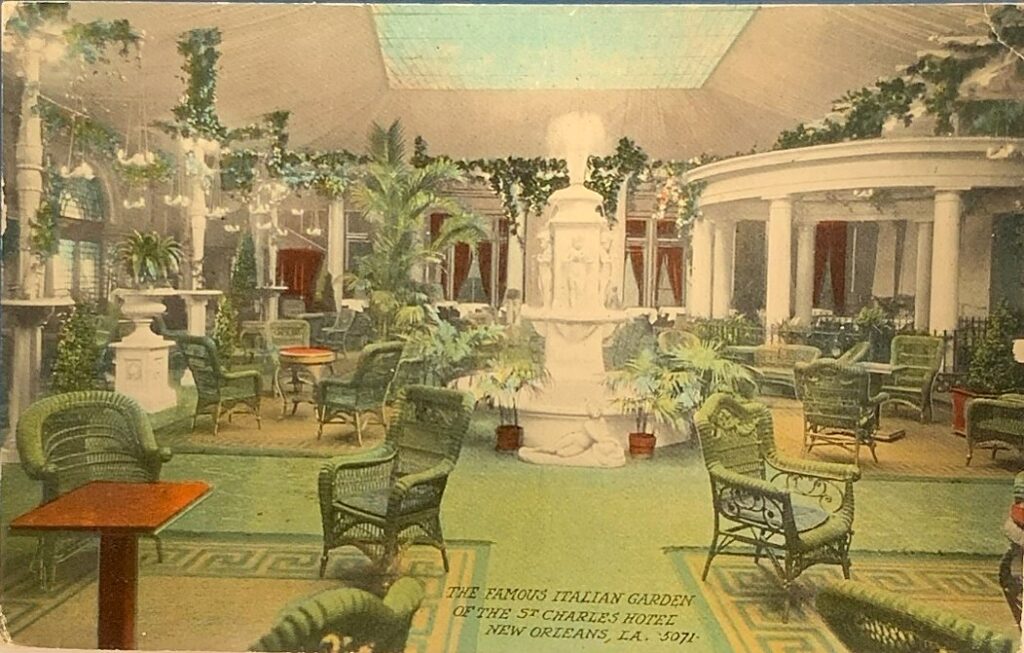
A Pattern Depicting the Third St. Charles
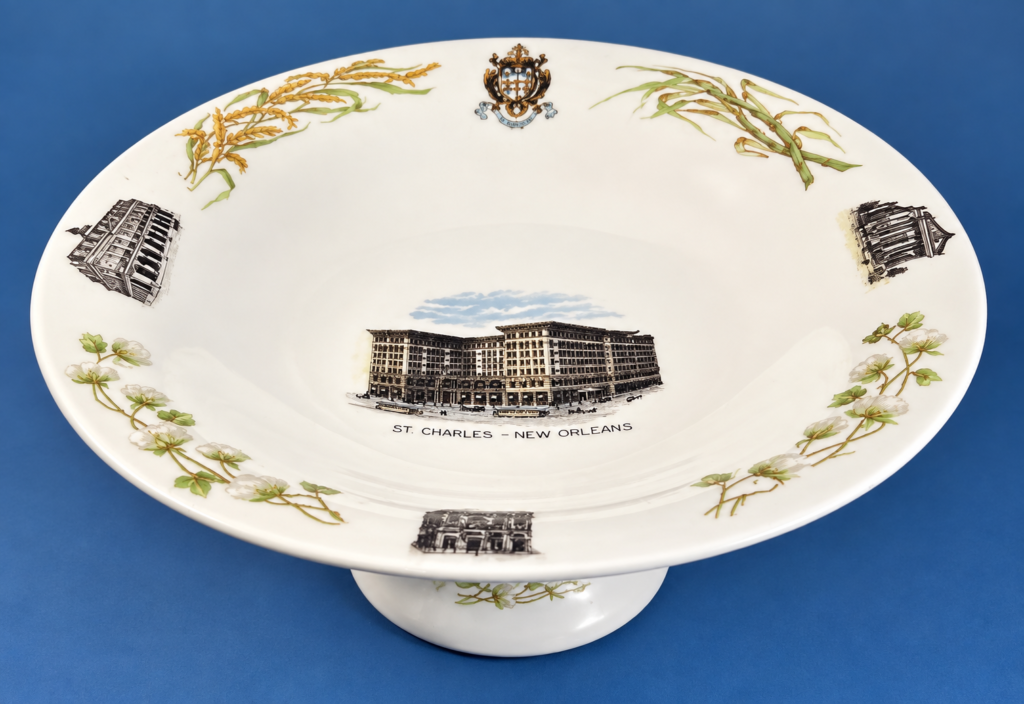
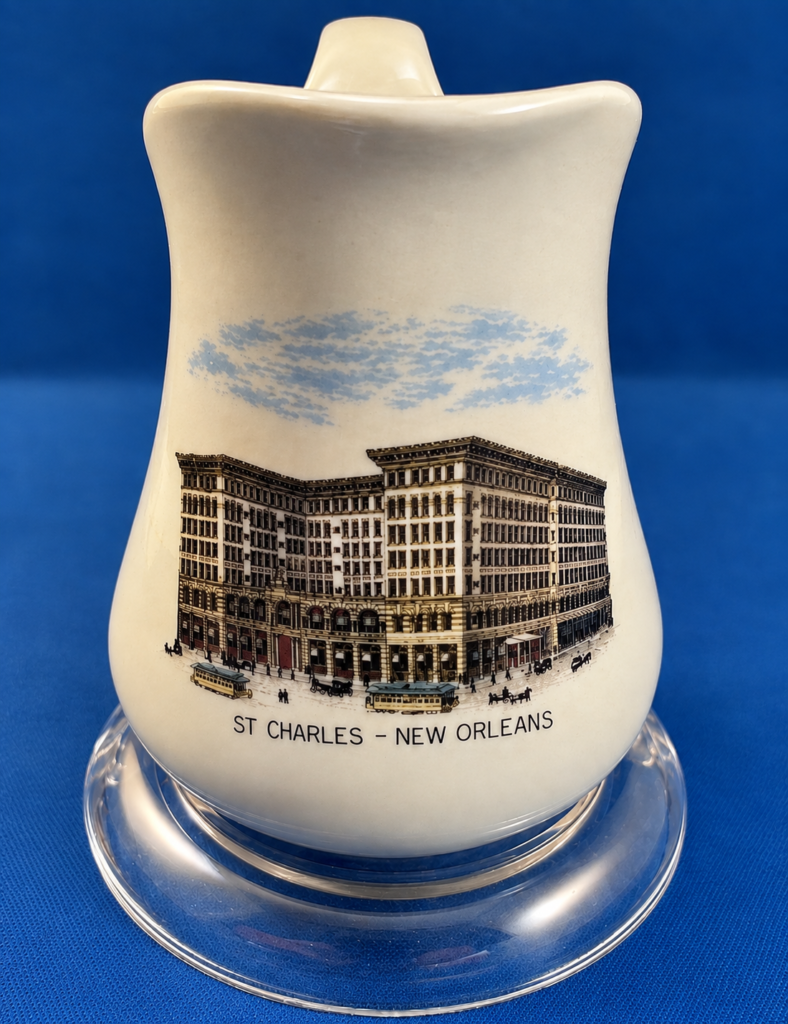
Finally, among the older china patterns known to have a connection to the St. Charles, we have a most interesting pattern depicting an image of the third St. Charles Hotel in the center and, depending on the size of the individual piece, other notable buildings of New Orleans around the edges.
An initial reaction to this design would be that this is souvenir ware, but wait! The maker is Bauscher, a prolific German producer of commercial chinaware, and there are several known shapes such as plates, gravy boats, tip trays, compotes, etc. This might suggest that it was used in service. Which is it? I don’t know. The Bauscher backstamp is ca. 1910.
What Happened to the Later St. Charles China?
In moving on from the St. Charles Hotel, there remains at least one question: Where is the rest of the china?
The china documented here is all around 100 years old, yet the St. Charles did not close its doors until 1974. Where is the china used during those later years? It must still be out there, but it is either unmarked, unknown to the author, or, in some instances, carries the name or logo of whatever hotel chain owned or operated the hotel at a given time.
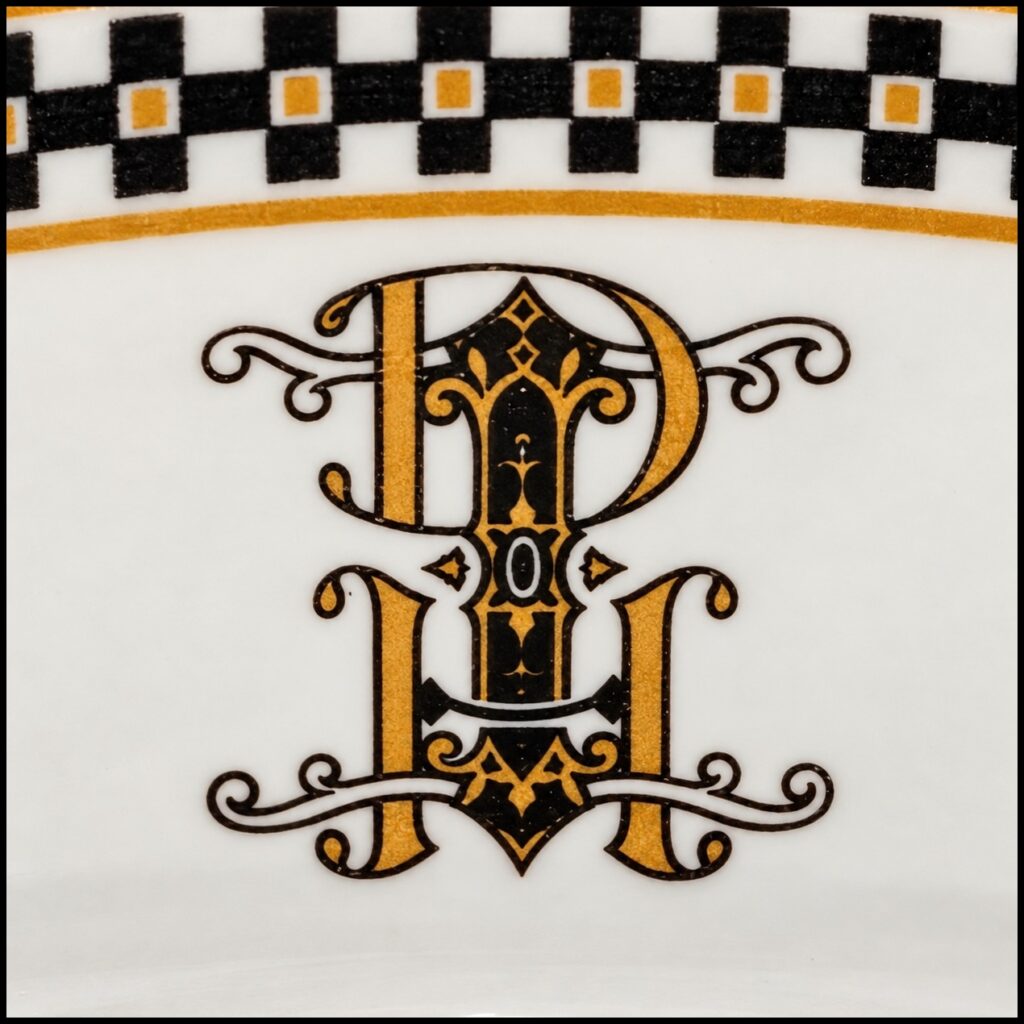
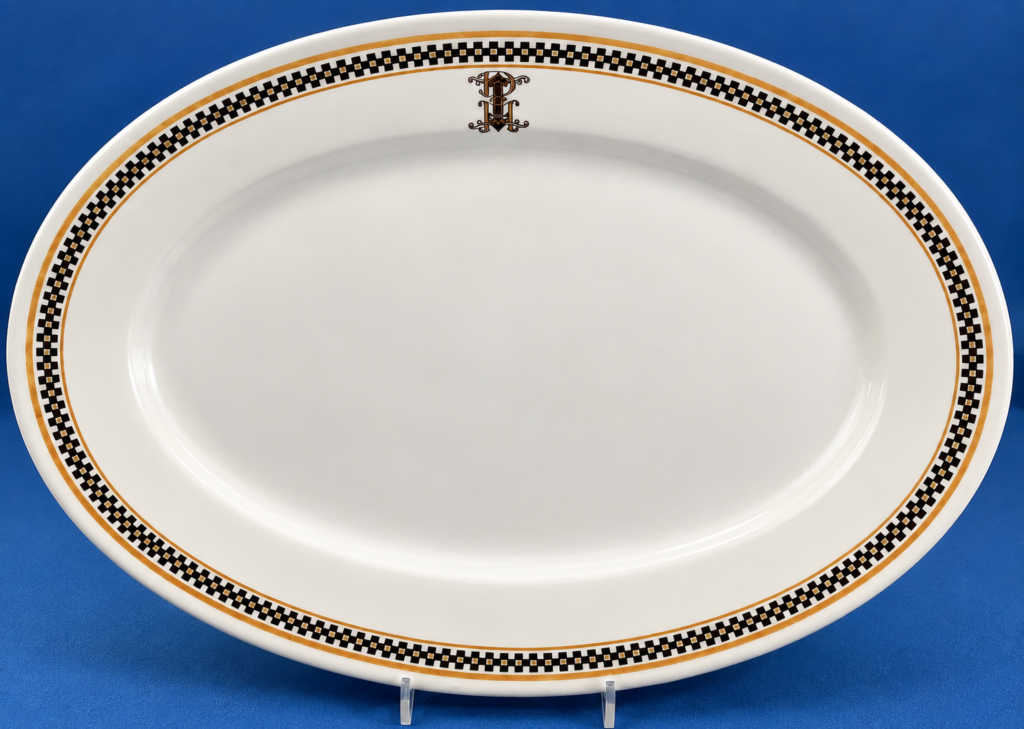
For instance, the St. Charles was owned and operated for several years by the Dinkler chain. An example of Dinkler Hotel china is shown here. It is not the only Dinkler pattern.
Additionally, the St. Charles was owned in later years by the Sheraton Hotel chain. During that period, when it was known as the Sheraton Charles, it is probable that their china was used at the hotel.
The St. Charles in Its Later Years
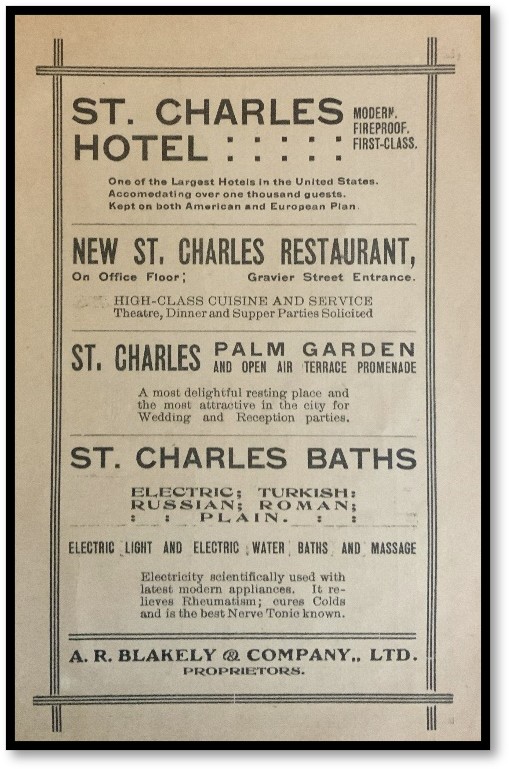
Advertisements such as this one offer a glimpse of the St. Charles and the services it offered to its guests.
The St. Charles as a New Orleans Landmark
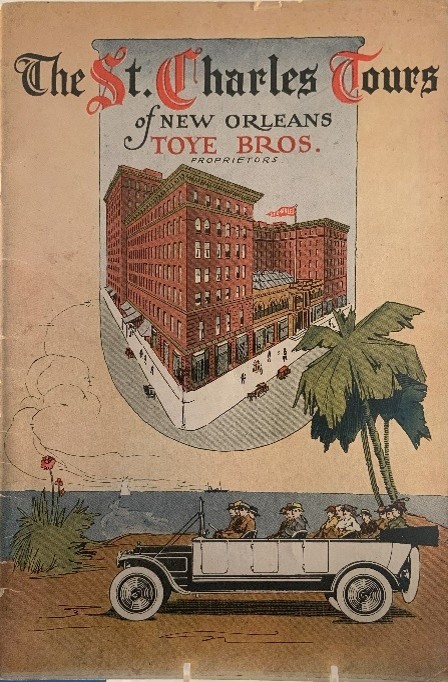
The St. Charles was not simply a hotel—it was also one of the landmarks visitors associated with New Orleans. This illustrated booklet, The St. Charles Tours of New Orleans, promoted sightseeing in the city while featuring the hotel prominently on its cover.
A Mystery Piece
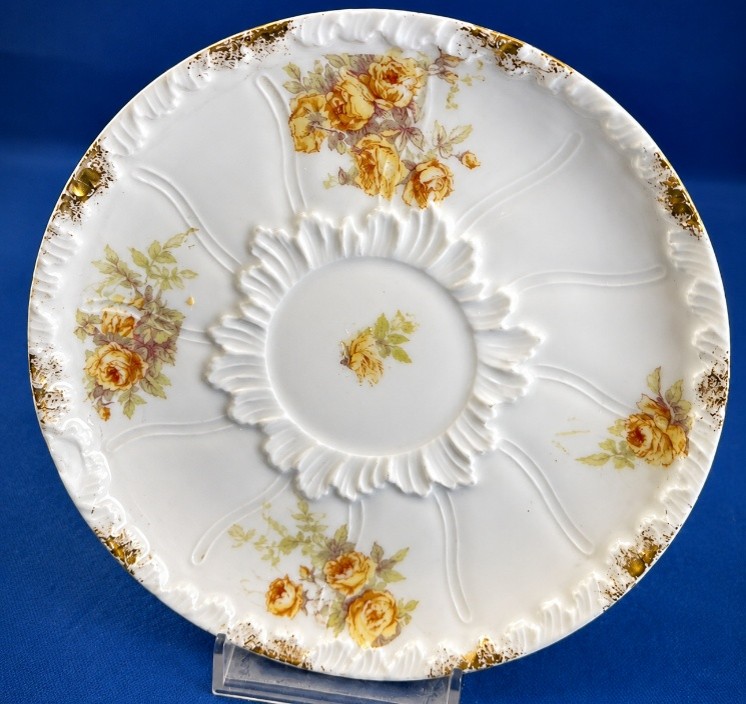
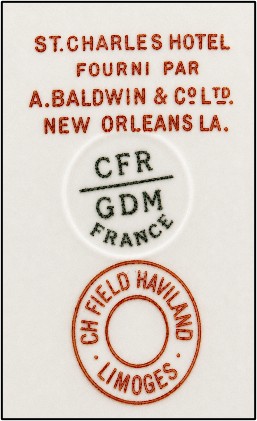
Finally, there is this mystery piece–at least, a mystery to me. This demitasse saucer carries the St. Charles Hotel back mark as well as the name of a local distributor, A. Baldwin & Co. Ltd.
As to its age, it is unknown, but I feel certain that it is at least pre-World War II. Whether it was used in service at the hotel or was a souvenir is not known.
Share Our Memories
Do you remember visiting this place, or have a story, memory, or information about it you’d like to share? We’d love to hear from you. Visit Share a Find to share your memories with us.